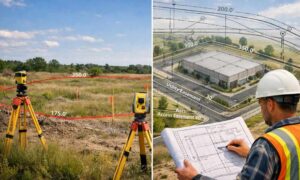
You found the perfect piece of raw land. The price is right. The location works. So you’re ready to build, right? Not quite. A plat of survey is the document that transforms raw acreage into a property developers can actually work with. Without it, you’re making decisions based on incomplete information. That’s a recipe for delays, redesigns, and unexpected costs.
Think of a plat of survey as your property’s official blueprint. It’s not just a map. It’s a legally verified document that confirms what you own, where the boundaries sit, and what restrictions apply. For developers, getting a plat of survey done early isn’t optional. It’s fundamental.
This article walks you through why a plat of survey matters, what it reveals, and how it protects your bottom line.
Why Raw Land Is Not Automatically Ready for Development
Owning land and having a developable parcel are two different things.
The Gap Between Ownership and Development Eligibility
You can own a 10-acre tract outright, but that doesn’t mean you can start building tomorrow. West Virginia municipalities, counties, and planning departments have specific requirements before they’ll issue permits. They want to know:
- Exact property lines and dimensions
- Legal description that matches public records
- Existing easements or rights-of-way
- Setback requirements for structures
- Access to public roads or utilities
- Zoning compatibility with your intended use
A plat of survey answers all these questions in one document. It’s the common language between you, the county assessor, planners, engineers, and lenders.
What Municipalities Require Before Approvals
Most West Virginia counties won’t move forward with a development application without a current, certified plat of survey. Some won’t even discuss zoning exceptions or variances without one. Banks financing the project want one too. Insurance companies sometimes require it.
The plat signals that someone qualified, a licensed surveyor, has actually been on the property and verified the details. That verification matters to every party involved.
How a Plat of Survey Establishes a Clear Legal Framework for a Property
A plat of survey consolidates critical information into a single, reliable reference.
What a Plat Shows and Why It Matters
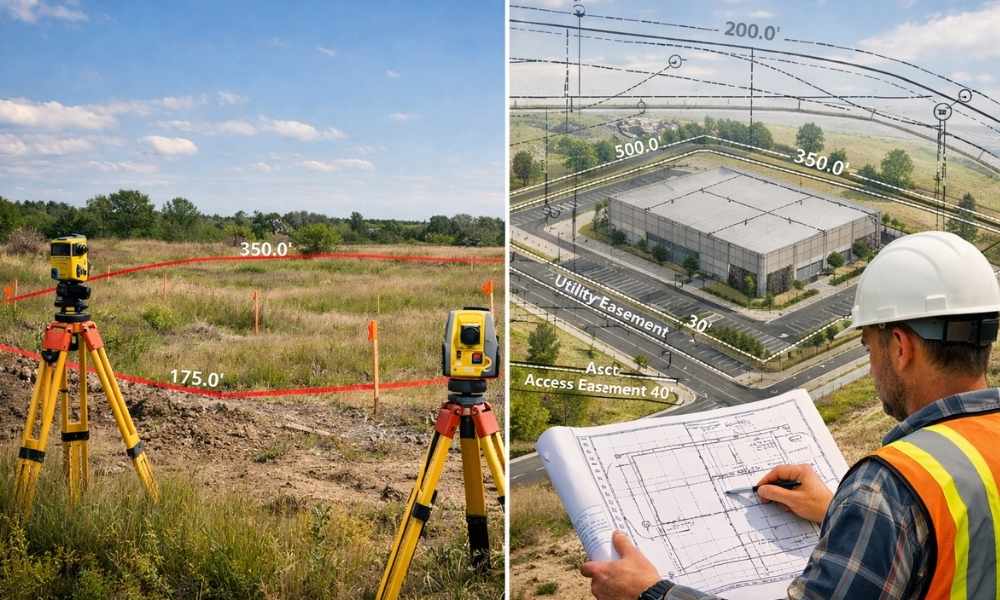
A complete plat of survey typically includes:
- Property boundaries drawn to scale
- Exact acreage or square footage
- Location of existing structures
- Easements and utility lines
- Visible natural features like streams, wetlands, and steep slopes
- Road frontage and access points
- Lot lines if the property is subdivided
- Surveyor’s certification and seal
Each element tells part of your property’s story. The boundaries tell you what you actually own. The easements tell you what you can’t touch. The topography tells you whether flat land is available for building.
Without a plat, you’re guessing. With one, you have facts.
The Legal Description Component
Every property in West Virginia has a legal description. It’s the formal way to identify the parcel in deeds, mortgages, and permits. A plat of survey doesn’t just show the property visually. It provides or confirms the legal description.
If the legal description in county records doesn’t match your deed, a surveyor will catch it. That catch prevents problems later when you’re already invested in design and permitting.
Identifying Property Constraints Before Design Plans Begin
Raw land often comes with invisible restrictions. A plat of survey makes them visible.
Easements, Setbacks, and Rights-of-Way
Easements are rights someone else has to use part of your land. Maybe a utility company has an easement to maintain a power line. A neighbor might have a driveway easement. West Virginia roads sometimes include rights-of-way that cut into your usable acreage.
Setback requirements vary by zoning. In residential areas, you might be required to build at least 30 feet from the front property line. In commercial zones, the requirement could be different.
A plat shows all of this before you hire an architect. If half your desired building footprint falls within a setback, you’ll know that now. You won’t find out after spending thousands on plans that won’t be approved.
Spotting Limitations Early Saves Time
Early discovery of constraints is early problem-solving. You can:
- Adjust your site plan before it’s finalized
- Request variances or exceptions with a clear understanding of what you need
- Talk to easement holders about alternatives
- Redesign access points if the preferred route isn’t available
- Scope utilities differently if standard connections won’t work
Each of these adjustments takes time and costs money. Making them after design is complete costs significantly more.
Helping Coordinate Utilities, Access, and Site Improvements
Development doesn’t happen in a vacuum. Your project needs water, sewer, electricity, and road access.
Water, Sewer, and Electrical Connections
A plat of survey shows where existing utilities run across or near your property. It shows easement locations and sometimes the depth or size of existing lines. That information is essential when engineers are planning how to connect your development to public systems.
In rural West Virginia, not every parcel has public sewer available. The plat helps you understand what’s adjacent to your property and what connections are realistic. If you’re 500 feet from a sewer line, you might need to design a septic system instead. The plat and its easement information help engineers make that call.
Road Access and Infrastructure Planning
Does your property have direct access to a public road? Is the frontage sufficient for the type of development you’re planning? Does a driveway entrance need to be at a specific location due to sightlines or traffic patterns?
A plat shows all of this. Engineers use it to determine whether you need a new road, a widened driveway, or a traffic study. Planners use it to confirm whether your proposed access point complies with road ordinances.
Coordination is faster when everyone is working from the same accurate document.
Reducing Development Risks and Costly Project Delays
Here’s the financial reality. Getting a plat of survey done early costs far less than fixing problems discovered late.
Avoiding Redesigns and Permitting Roadblocks
A common scenario: A developer moves forward with a site plan based on assumptions about property boundaries or easements. Six months into permitting, the county planner asks questions that the plat of survey would have answered immediately. The site plan gets revised. Approvals are delayed. Costs climb.
This happens less when the plat exists from day one. Planners see the plat. They identify issues during pre-application meetings, not during formal review. You adjust early. Permitting moves faster.
Why Early Investment Prevents Later Problems
Investing 2,000 to 5,000 dollars in a plat of survey at the start of your project protects investments of 100,000 dollars or more in design, permitting, and construction. If the plat reveals a problem, you solve it when changes are cheap. If the plat isn’t done and the problem emerges during construction, solving it is exponentially more expensive.
Developers who skip the plat often regret it. Those who get one done early move projects forward with confidence.
Get Your Plat. Then Build.
A plat of survey is not just paperwork. It’s clear. It’s the difference between moving forward with confidence and moving forward with assumptions. In West Virginia, property boundaries, easements, and municipal requirements vary widely. That clarity protects both your timeline and your budget.
Get the plat done first. Then build with certainty.